Elephants gather information from smells and chemical cues in two different ways. The main olfactory system, responsible for the sense of smell, detects airborne odors through the trunk, helping elephants locate food and water. The vomeronasal system operates at close range, analyzing liquid-borne chemicals for more targeted social and biological information.
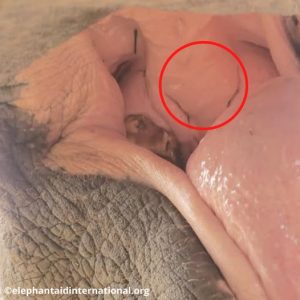
The vomeronasal organ, also called Jacobson’s organ, is the key sensory structure of this system. It consists of two fluid-filled sacs just above the palate, accessible through two small slits behind the upper incisors. Specialized sensory cells detect chemical signals and relay the information to the brain.
Many mammals have a Jacobson’s organ, but elephants use theirs in a distinctive way. Horses and cats use a flehmen response, lifting or curling the upper lip to direct scent toward the organ. Elephants use the finger-like projections at the trunk tip to collect urine, dung, or secretions, then press the sample against those slits.
Through this system, elephants can identify female fertility, assess a bull’s dominance, detect illness in herd members, recognize individuals by chemical signature, and read another elephant’s emotional or physiological state.
Photo: When Carol was last in Nepal, she was fortunate to photograph Jacobson’s organ in the roof of Chanchal Kali’s mouth!