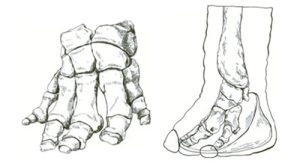
Elephants walk on tiptoe, with their toe bones angled downward rather than resting flat on the ground like humans. Functionally, their feet work similarly to those of dogs or cats, with weight carried through the toes.
While all elephants have five toes on their skeletal feet, the number of visible toenails on the outside varies between species. Beneath the toe bones lies a thick, fibrous, fatty pad called the digital cushion. This structure distributes body weight across a large surface area when the foot meets the ground, reducing pressure on bones and joints. It also helps elephants move quietly, and ridges on the soles improve traction on uneven or slippery surfaces.
Elephants also have cartilaginous support structures, sometimes called “predigits” or “sixth toes,” that brace the cushion and assist in weight distribution. Together, these features allow elephants to support their size while moving steadily over long distances.