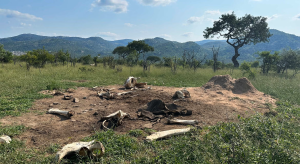
Elephants are a keystone species, shaping habitats in ways that other species depend on. Their influence while alive is well established, but their ecological role after death has been less understood. Research published in October 2026 reveals that elephant remains in South Africa’s Kruger National Park trigger changes throughout the food web that persist for years.
A decomposing elephant creates a nutrient hotspot that alters the soil, microbes, plants, and grazing activity. Nitrogen can reach up to 3,000 times normal levels at very fresh sites, which appears to be toxic to plants at first. Later, the grass that returns is more nutritious and draws grazers. The tradeoff is that fewer kinds of plants and microbes thrive in those patches.
Researchers suggest savannas may be a “Goldilocks zone,” with enough moisture for plants and microbes to use the nutrients, but not so much rain that they wash away. This hypothesis is still being tested.
Elephants and their relatives once ranged across most continents. Where they have disappeared, ecosystems may have lost both living habitat engineers and the natural processes their remains sustained long after death. The findings hint that what we see in nature may be shaped by legacies from the past, even when the animals that created them are no longer there.
Photo: Scattered elephant remains in Kruger National Park