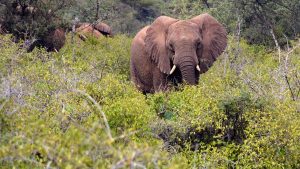
African elephants are among the best-known animals at risk of extinction today, driven by ivory poaching and habitat fragmentation. As landscapes are divided by human activity, populations are reduced to smaller, more isolated pockets across Africa. Today, elephants use only 17% of the African land considered suitable habitat.
What has been less understood is how isolation affects elephants at the genomic level, meaning how their DNA changes over time. Researchers analyzed samples from 232 African elephants across 17 countries, using collections from the 1990s, the broadest geographic coverage ever assembled for this species. In a long-lived animal, those samples offer a genetic snapshot from about one elephant generation ago, before more recent pressures intensified.
Where populations remained connected, gene flow maintained genetic diversity. Where they became isolated, the genome reflected it. Early signs of inbreeding and genetic drift, the random loss of genetic variation in small populations, were identified in elephants cut off from others. Without genetic diversity, populations become less able to fight disease, adapt to environmental change, and reproduce successfully, increasing the risk of extinction. Warning signs were strongest in isolated savanna elephant populations, particularly in Ethiopia and Eritrea.
Researchers conclude that gene flow has been a key force in African elephant evolution and that protecting large, connected habitats is essential to the species’ genetic health and survival.
Source: de Manuel et al., 2026, Nature Communications, “Historical gene flow shaped African elephant evolution.”
Photo: Northeastern Africa’s most isolated elephant populations.