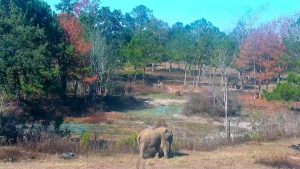
Elephants eat almost constantly because their digestive efficiency depends on volume rather than precision. As hindgut fermenters, elephants rely on vast microbial communities to break down tough plant material and extract nutrients. Continuous intake keeps this microbial system stable and productive.
Movement and habitat diversity matter because different plants, soils, and water sources support different microbes. As elephants travel, they continually reseed and rebalance their gut microbiome. Seasonal diet changes are not accidental; they help maintain microbial diversity and allow elephants to adapt to shifting nutrient availability.
Stress and confinement disrupt this system. Restricted movement, limited diets, and chronic stress alter gut microbes, weakening digestion, immune function, and overall resilience. Calves are especially vulnerable. They acquire essential microbes through prolonged contact with their mothers and herd, shaping digestion and immunity for life.
Elephant health is inseparable from the invisible ecosystem inside them, one that evolved alongside freedom of movement, social bonds, and a living landscape.
Photo: Mundi, feeding an entire internal ecosystem.