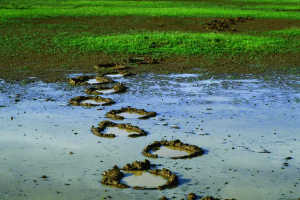
An elephant’s foot can sink up to 12 inches, or 30 centimeters, into soft ground, leaving a deep footprint. When it fills with water, it can become a self-contained habitat for dozens of species.
Researchers in Myanmar found water-filled Asian elephant tracks containing frog eggs and tadpoles. These small pools may provide temporary breeding sites during the dry season, especially when larger water sources are scarce. Because the pools are small and temporary, they may have fewer predators, such as fish, that would otherwise eat eggs or tadpoles.
In Uganda, researchers studying African elephant tracks found 61 kinds of aquatic invertebrates living in water-filled footprints, including water beetles, mayflies, mites, snails, and tadpoles. Older tracks supported the most life, because accumulated leaves and plant material added food and structure to the pools.
Other animals leave tracks that hold water too, but elephants can create larger, more persistent pools simply because of their size and weight. Because elephants travel long distances, they can add many small water sources across the landscape, supporting life in places that might otherwise dry out.
Photo: Water-filled African elephant tracks in Uganda